MemoHoney prints an amount beside every ingredient, including percentages of Daily Value for the two nutrients that have one. That makes a full audit possible — and it is worth stating plainly that the two largest MemoHoney pages online do not publish these numbers at all.
The short answer
Seven lines totalling roughly 640 mg of amino acids plus 7.5 mg NE of niacin and 18 mg of calcium. After salt-form conversion the panel delivers about 315 mg of free arginine and 140 mg of free citrulline. Niacin at 47% of the Daily Value is the only line at a genuinely meaningful amount.
The MemoHoney ingredient table
| Ingredient | On the panel | Used in research |
|---|---|---|
| L-Arginine (base) | 200 mg | 3,000–6,000 mg/day for blood-flow endpoints |
| L-Arginine AKG 2:1 Extract | 200 mg | Same arginine pathway; no separate memory evidence |
| L-Citrulline HCl | 100 mg | 3,000 mg/day L-citrulline |
| L-Citrulline Malate | 100 mg | 6,000–8,000 mg/day citrulline malate |
| Beta-Alanine | 40 mg | 3,200–6,400 mg/day for 4–10 weeks |
| Niacin (Vitamin B3) | 7.5 mg NE (47% DV) | 14–16 mg NE/day RDA for adults |
| Calcium (as Calcium Carbonate) | 18 mg (1.5% DV) | 1,000–1,200 mg/day RDA for adults |
The three numbers that decide this product
Arginine, about 315 mg of free compound. Two label lines appear to give 400 mg, but arginine AKG at a 2:1 ratio is roughly 57 to 60 per cent arginine, so the second line contributes about 115 mg rather than 200. Vascular research uses three to six grams a day, and oral arginine is heavily degraded by arginase before it reaches circulation.
Citrulline, about 140 mg of free compound. Again two lines, again salt forms: the HCl is roughly 85 per cent citrulline, the malate roughly 56 to 60 per cent. Studied intakes are around 3 g of L-citrulline or 6 to 8 g of citrulline malate. This is approximately one twenty-first of the lower figure.
Beta-alanine, 40 mg. The loading protocol is 3.2 to 6.4 g a day for four to ten weeks. Forty milligrams is about one per cent of that, and it is also well below the roughly 800 mg needed to produce the paraesthesia that beta-alanine is famous for — which matters, because a competing MemoHoney page tells buyers to expect exactly that sensation.
Comparing MemoHoney bundles
The MemoHoney discount is applied by bundle size: $79 a bottle for two, $69 for three and $49 for six. Three bottles covers a fair 8-to-12-week trial and ships free.
Check MemoHoney Bundle PricesOfficial website checkout · 60-day guarantee · confirm the terms before paying
Where the label genuinely lands
One line deserves real credit. Niacin at 7.5 mg NE supplies 47 per cent of the adult Daily Value. Niacin is the precursor to NAD, the coenzyme carrying electrons through energy-releasing metabolism, and nervous tissue is metabolically expensive. This is a sensible nutritional contribution rather than a token sprinkle. The honest caveat is that niacin deficiency is uncommon in people eating a varied diet, so topping up an adequate intake does not sharpen anyone's thinking.
It is also worth crediting the excipient list. Hypromellose, vegetable stearate and silicon dioxide is about as short and unremarkable as an "other ingredients" line gets, and the capsule is vegetarian.
Every ingredient, examined
1. L-Arginine (base) — 200 mg
The nitric-oxide substrate, and the joint-largest line on the panel.
Arginine is the amino acid the body converts into nitric oxide, the signalling molecule that relaxes smooth muscle in blood vessel walls. That is a genuine, well-described pathway. The problem is arithmetic: trials reporting measurable vascular effects use three to six grams a day, and oral arginine is heavily broken down by arginase in the gut and liver before it reaches circulation. Two hundred milligrams once a day is a small fraction of an intake that is already poorly absorbed. It is also worth being direct about something the marketing never says: no published trial shows oral arginine improving memory or recall in healthy adults.
Worth knowing: Adds to the effect of nitrates, blood pressure medication and ED drugs. Ask a pharmacist. · MedlinePlus — L-arginine
2. L-Arginine AKG 2:1 Extract — 200 mg
The same amino acid again, bound to alpha-ketoglutarate — a second label line.
This is where reading the panel carefully pays. Arginine alpha-ketoglutarate is arginine bound to a second molecule, and at a 2:1 ratio roughly 57 to 60 per cent of that 200 mg is actually arginine — about 115 mg. The rest is AKG. So the two arginine lines together deliver roughly 315 mg of free arginine, not the 400 mg the panel appears to show. AAKG was popular in sports nutrition in the 2000s and controlled trials largely failed to show it outperforming plain arginine. Two lines, one amino acid.
Worth knowing: Same vasodilatory interactions as plain arginine. · NIH ODS — exercise and performance supplements
3. L-Citrulline HCl — 100 mg
The better-absorbed route to arginine — at roughly 3% of the studied intake.
Citrulline is included in formulas like this for a sound reason: it bypasses the first-pass breakdown that destroys most oral arginine, then converts to arginine in the kidneys, which is why it raises plasma arginine more effectively than arginine itself does. The studied intake for blood-flow and performance endpoints is around 3 g of L-citrulline daily. This line provides 100 mg of the hydrochloride form, of which roughly 85 per cent is citrulline — about 85 mg. The mechanism is correct and the quantity is not close.
Worth knowing: Vasodilatory; same medication conversation as arginine. · Citrulline research summary
4. L-Citrulline Malate — 100 mg
Citrulline again, in a second salt form — the fourth line feeding one pathway.
Citrulline malate is citrulline bound to malic acid, usually in a 2:1 or 1:1 ratio, and it is the form used in most exercise-performance research at six to eight grams per dose. In a 2:1 preparation roughly 56 to 60 per cent of the weight is citrulline, so 100 mg contributes about 55 mg. Add that to the 85 mg from the HCl line and the panel's apparent 200 mg of citrulline resolves to roughly 140 mg of free citrulline — about one twenty-first of the 3 g used in research.
Worth knowing: As above. Malate itself is inert at this amount. · NIH ODS — exercise and performance supplements
5. Beta-Alanine — 40 mg
A muscular-endurance ingredient at roughly one per cent of its loading dose.
Beta-alanine is the rate-limiting precursor of carnosine, a dipeptide that buffers acidity inside muscle. The research protocol is a loading one: 3.2 to 6.4 g a day for four to ten weeks to raise muscle carnosine, with benefits reported in high-intensity efforts lasting one to four minutes. There is no body of evidence for beta-alanine improving memory. At 40 mg this is roughly one per cent of the loading dose, and the practical consequence matters for buyers: the famous beta-alanine tingle needs roughly 800 mg or more in a single serving. Forty milligrams cannot produce it.
Worth knowing: Harmless at this amount. Paraesthesia at real doses is benign but startling. · NIH ODS — beta-alanine
6. Niacin (Vitamin B3) — 7.5 mg NE (47% DV)
The one line delivered at a genuinely meaningful nutritional amount.
Credit where it is due. Niacin is a real nutrient with a real job: it is the precursor to NAD, the coenzyme that carries electrons through the reactions releasing energy inside every cell, and nervous tissue is metabolically expensive to run. At 7.5 mg NE this line supplies 47 per cent of the adult Daily Value, which is a sensible contribution rather than a token one. Two honest caveats. Niacin deficiency is rare in people eating a varied diet, so topping up an adequate intake does not improve cognition. And at this amount there is no niacin flush — that requires roughly 30 to 50 mg of nicotinic acid, four to six times what is here.
Worth knowing: No flush risk at 7.5 mg. High-dose niacin is a different conversation entirely. · NIH ODS — Niacin
7. Calcium (as Calcium Carbonate) — 18 mg (1.5% DV)
1.5% of a day's calcium — functionally a flow agent given an ingredient line.
Calcium carbonate is a common tabletting and encapsulation excipient, and at 18 mg it supplies one and a half per cent of an adult's daily calcium. Nobody meets a calcium requirement from this, and nobody would notice its absence. It is listed above the line as an active ingredient rather than below it among the other ingredients, which makes the panel read as seven items instead of six. Notably, the two largest MemoHoney pages online both describe the formula as six ingredients and omit this line entirely.
Worth knowing: Can interfere with the absorption of some antibiotics and thyroid medication at real doses. · NIH ODS — Calcium
The ingredients that are not here
An audit of a memory supplement has to include the absences. None of the following appear on the MemoHoney panel:
- Bacopa monnieri
- Ginkgo biloba
- Citicoline (CDP-choline)
- Alpha-GPC
- Lion's Mane
- Phosphatidylserine
- Huperzine A
- Acetyl-L-carnitine
- Omega-3 DHA
- Vitamin B12
- Rhodiola rosea
- L-theanine
Those are the compounds with human trials behind them for recall, attention or age-related cognitive change. Their absence does not make MemoHoney a bad supplement — it makes it a different supplement from the one the front of the bottle describes.
Allergens, sensitivities and interactions
- Nitrates, blood pressure medication and ED drugs: arginine and citrulline are vasodilators and the effects can add together. This is the interaction that matters here.
- Surgery: stop at least two weeks beforehand and tell your surgical team.
- Herpes simplex: arginine can promote viral replication in susceptible people. Unlikely to matter at 315 mg, but worth knowing if you get frequent cold sores.
- Calcium carbonate: at real doses it interferes with absorption of some antibiotics and thyroid medication. At 18 mg it will not.
- Capsule shell: hypromellose, which is plant-derived rather than gelatin.
- Caffeine: none in the formula at all.
Read how these ingredients work together, or see the benefits the formula can reasonably support.
Frequently asked questions
What are the ingredients in MemoHoney?
Niacin 7.5 mg NE (47% DV), Calcium as calcium carbonate 18 mg (1.5% DV), L-Arginine base 200 mg, L-Arginine AKG 2:1 Extract 200 mg, L-Citrulline HCl 100 mg, L-Citrulline Malate 100 mg and Beta-Alanine 40 mg, in a hypromellose capsule with vegetable stearate and silicon dioxide.
Are the MemoHoney doses high enough to work?
Niacin is at a genuinely meaningful 47% of the Daily Value. The amino acids are not: after salt-form conversion the panel delivers roughly 315 mg of free arginine against a 3,000 mg research intake, and about 140 mg of free citrulline against 3,000 mg.
Does MemoHoney contain bacopa, ginkgo or Alpha-GPC?
No. None of the standard nootropic ingredients appear on the Supplement Facts panel. Some MemoHoney marketing material and one competing page's FAQ list ingredients such as ginkgo, bacopa and Alpha-GPC, but they are not on the label.
Does MemoHoney contain caffeine or stimulants?
No. There is no caffeine or other stimulant in the formula, and at 7.5 mg NE of niacin there is no flush either.
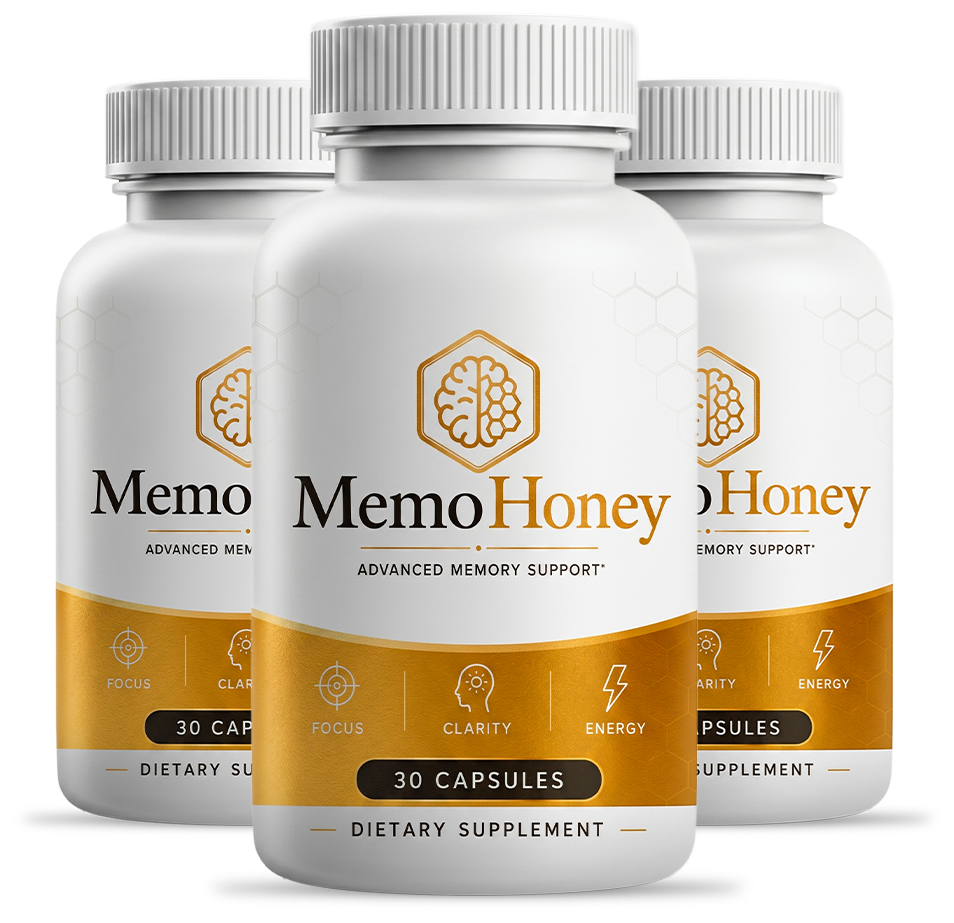
MemoHoney Official Website
per bottle on the 6-bottle bundle · free US shipping on 3 and 6
Check Current Price 60-day guarantee · official checkout only